Buying a dump truck is a significant investment. Whether you’re starting a construction business, expanding an existing operation, or replacing an older truck, the financing decision can affect your monthly cash flow for years.
One of the first choices you may encounter is who you should get your financing through: a direct lender or a financing broker.
At first, the difference may seem simple. A direct lender provides financing directly, while a broker helps connect you with potential lenders. But the difference can affect how your application is handled, how many financing options you can compare, who makes the final lending decision, and what fees you may pay.
So, which option is better for dump truck financing?
There isn’t one answer for every borrower. The right choice depends on your credit profile, business history, equipment, financing needs, and how much help you want during the process.
Let’s break down the differences.
What Is a Direct Lender?
A direct lender is a financial company that provides financing directly to the borrower. Instead of sending your application through an intermediary, you work with the company that is responsible for evaluating and funding the transaction.
In commercial truck financing, a direct lender may finance equipment such as dump trucks, semi-trucks, trailers, and other commercial vehicles.
The basic process generally looks like this:
You → Direct Lender → Financing Decision → Funding
The lender reviews your application, evaluates the proposed truck and your financial situation, determines whether the transaction fits its lending criteria, and provides the financing if approved.
Working directly with a lender can also give you a single point of contact throughout the financing process.
What Is a Financing Broker?
A financing broker does not normally provide the loan itself. Instead, the broker acts as an intermediary between the borrower and potential lenders.
The basic process looks more like this:
You → Broker → Potential Lenders → Financing Offer
A broker may have relationships with multiple financing sources and can help identify lenders whose requirements may fit your situation.
This can be particularly useful when your financing request doesn’t fit the requirements of a traditional lender. For example, a borrower may have limited business history, less-than-perfect credit, or an older piece of equipment.
However, a broker is not the final decision-maker. The lender ultimately determines whether it will approve the financing and under what terms.
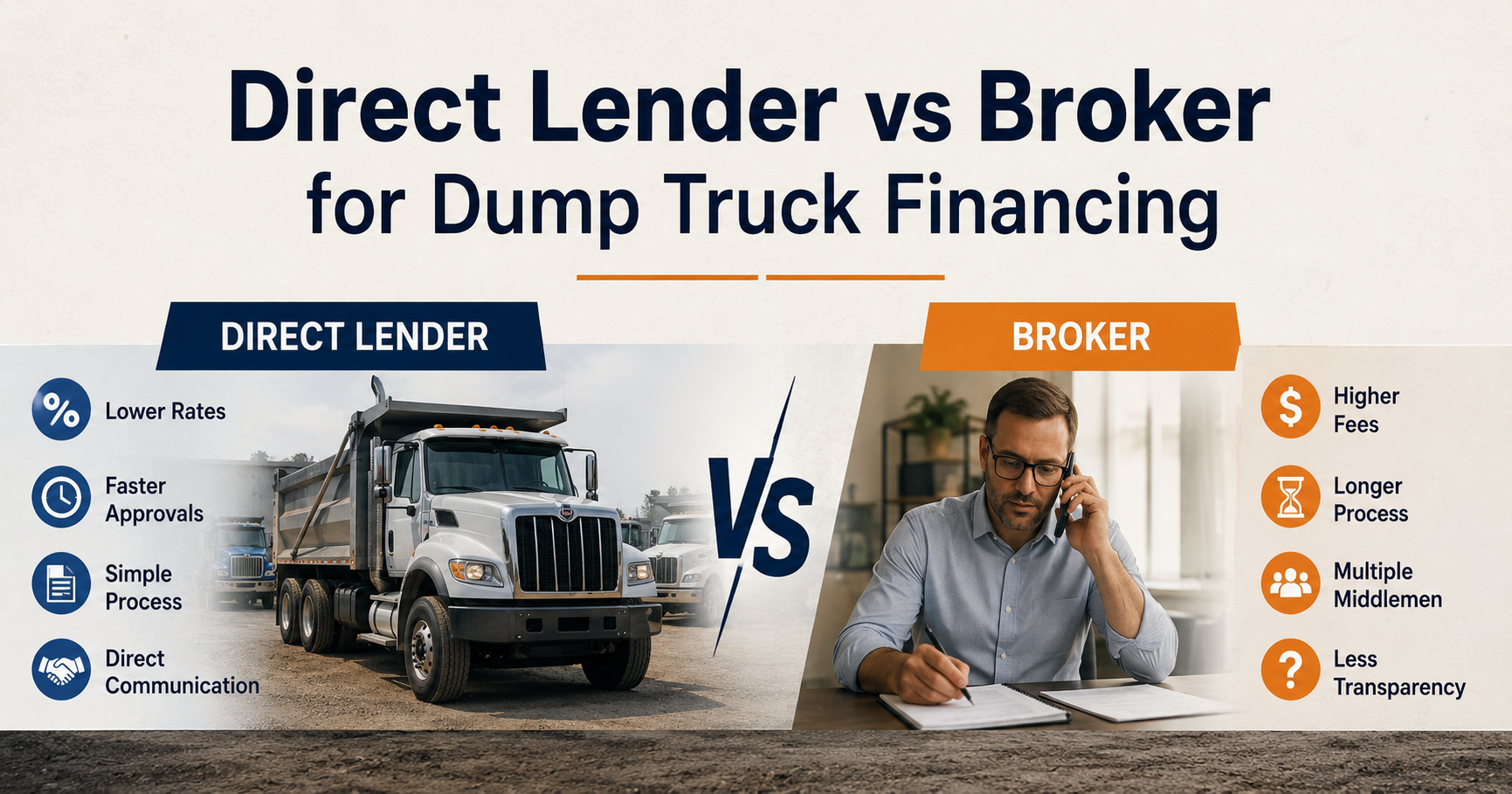
Direct Lender vs. Broker: What’s the Difference?
| Factor | Direct Lender | Financing Broker |
|---|---|---|
| Who provides the financing? | The lender | A third-party lender |
| Who evaluates the application? | Directly through the lender | Broker helps place the application; lender underwrites it |
| Number of potential lenders | Usually its own financing programs | May provide access to multiple lenders |
| Communication | Direct with lender | Primarily through broker |
| Financing options | Limited to that lender’s programs | Potentially broader |
| Fees | Depends on lender | Broker compensation may apply |
| Best suited for | Borrowers who know what they need | Borrowers who want help comparing potential lenders |
The important point is that neither model is automatically better. The value depends on the individual transaction.
Advantages of Working With a Direct Lender
1. A More Direct Financing Process
With a direct lender, you’re dealing with the company making the financing decision.
You don’t have to wonder which outside lender is reviewing your application or where your application currently stands. You can communicate directly with the financing team handling the transaction.
This can make the process easier to understand, particularly if you already know what type of dump truck you want to purchase.
2. One Point of Contact
A direct lender can provide a straightforward communication path.
You can discuss questions about:
- Loan amount
- Down payment
- Interest rate
- Repayment term
- Truck eligibility
- Required documentation
- Closing and funding
Having one company responsible for the transaction can make it easier to keep track of the process.
3. Potentially Simpler Decision-Making
If your application fits the lender’s criteria, you aren’t waiting for a broker to determine which financing source might be appropriate.
The lender can review the transaction according to its own requirements and tell you whether it can move forward.
That doesn’t guarantee faster approval. Actual processing time depends on the lender, application, documentation, truck, and borrower.
4. Direct Understanding of the Financing Terms
When you work directly with the lender, you can ask questions about the loan from the company actually providing it.
That can be useful when comparing the total cost of financing, rather than focusing only on the advertised monthly payment.
Advantages of Using a Financing Broker
Going through a broker isn’t necessarily a bad choice. In some situations, it can actually make the financing process easier.
1. Access to Multiple Financing Sources
One of the biggest advantages of a broker is the possibility of accessing multiple lenders.
Instead of approaching several financing companies individually, a broker may be able to identify potential lenders based on your circumstances.
This can be useful when you aren’t sure which type of financing program fits your business.
2. Helpful for More Complicated Applications
Not every borrower has perfect credit, several years in business, or a straightforward financial history.
A broker may be able to identify lenders that consider factors beyond a traditional credit profile.
For example, your application may involve:
- A newer business
- Used equipment
- High-mileage equipment
- Limited business history
- Less-than-perfect credit
- A specialized commercial vehicle
That doesn’t mean approval is guaranteed. It simply means having access to more potential financing sources may give you more avenues to explore.
3. Help Comparing Options
A financing broker can help you compare potential offers from different lenders.
That can save time if you don’t want to contact multiple lenders yourself.
However, always ask for the complete cost of each offer. A lower monthly payment may come with a longer term or additional costs.
4. Industry Experience Can Be Valuable
An experienced commercial financing broker may understand the equipment and financing market and know which lenders are more comfortable with particular types of transactions.
That knowledge can be valuable when you’re unsure where to start.
What Does a Direct Lender Cost Compared With a Broker?
This is one area where borrowers should be careful.
It’s tempting to assume that a direct lender is always cheaper because there is no broker involved. That’s not necessarily true.
Similarly, you shouldn’t assume that every broker adds a hidden markup.
Broker compensation can vary. It may come from the borrower, lender, or another arrangement depending on the transaction. The important thing is to understand who is being paid, how much, and whether that cost is included in your financing terms.
Before accepting an offer, ask:
- Is there a broker fee?
- Who pays the fee?
- Is the fee included in the amount being financed?
- What is the interest rate or APR?
- What is the total amount I will repay?
- Are there application or documentation fees?
- Are there prepayment penalties?
- Are any other charges included?
Don’t judge an offer by the interest rate alone.
Which Option Is Better for Dump Truck Financing?
The answer depends on what you need.
A Direct Lender May Make Sense If:
- You already know the type of financing you want.
- You prefer communicating directly with the financing company.
- Your application fits the lender’s requirements.
- You want a straightforward financing relationship.
- You have already compared available financing options.
A Broker May Make Sense If:
- You want to compare multiple potential lenders.
- You’re unsure where your application fits.
- Your credit history isn’t ideal.
- You’re a newer business.
- You’re financing an older or specialized dump truck.
- You want someone to help navigate different financing programs.
Neither option guarantees a better interest rate or approval.
The lender still evaluates the transaction based on its own criteria, which may include your credit, business history, cash flow, down payment, equipment, and other factors.
What Should You Compare Before Choosing?
Whether you work with a direct lender or a broker, focus on the actual financing offer, not just the source.
Interest Rate or APR
Understand how much you’re being charged for borrowing the money.
Loan Term
A longer term may reduce your monthly payment but can increase the total interest paid.
Down Payment
A larger down payment reduces the amount financed, but you should also make sure you retain enough working capital for fuel, insurance, maintenance, payroll, and other business expenses.
Total Repayment Cost
This is one of the most important numbers to examine.
Two financing offers can have similar monthly payments but very different total costs.
Fees
Look for documentation fees, origination fees, broker fees, closing costs, and other charges.
Prepayment Terms
If you expect to pay the loan off early, understand whether the agreement includes any prepayment charges.
Equipment Requirements
Ask whether the lender has restrictions based on:
- Truck age
- Mileage
- Condition
- Purchase price
- Seller type
- Equipment value
These factors can affect whether a particular dump truck qualifies for financing.
Questions to Ask a Direct Lender or Broker
Before submitting an application or signing an agreement, ask clear questions.
If you’re working with a direct lender:
- Are you the company providing the financing?
- What are your requirements for financing a dump truck?
- What factors determine my interest rate?
- Are there any application or documentation fees?
- Are there prepayment penalties?
- What happens after I submit my application?
If you’re working with a broker:
- How many lenders could potentially review my application?
- How are you compensated?
- Will I know which lender ultimately provides the financing?
- Is your fee included in my financing?
- Will submitting my application involve multiple credit inquiries?
- Can I compare the final offers before choosing one?
Getting these answers upfront can prevent unpleasant surprises later.
Don’t Choose Financing Based Only on Approval
Getting approved for a dump truck loan doesn’t automatically mean you’ve received a good deal.
A financing offer should make sense for your business.
For example, suppose a lender offers a relatively low monthly payment by extending the repayment period. That payment may look attractive initially, but you could end up paying significantly more interest over the life of the loan.
Instead, consider the relationship between:
Truck cost + financing cost + operating expenses + expected revenue
Your dump truck needs to generate enough income to cover its payment and operating costs while still leaving your business with a reasonable margin.
That’s why financing should be treated as a business decision—not simply a way to get approved for a truck.
How to Choose the Right Financing Partner
Before choosing a lender or broker, look beyond advertisements and promotional rates.
Look for:
- Clear financing terms
- Transparent fees
- Experience with commercial equipment
- Responsive communication
- Realistic eligibility requirements
- Financing that matches your business needs
- A clear explanation of the total repayment cost
You should also compare more than one offer when possible. The CFPB recommends shopping around when evaluating financing rather than automatically accepting the first option presented.
Final Thoughts
Choosing between a direct lender and a financing broker for dump truck financing comes down to your circumstances.
A direct lender can provide a more direct relationship with the company financing your equipment. A broker can provide access to multiple potential financing sources and may be useful when your application doesn’t fit neatly into one lender’s requirements.
The best approach is to look beyond the label.
Compare the interest rate, total repayment amount, fees, down payment, loan term, prepayment conditions, and equipment requirements before making your decision.
If you’re looking for dump truck financing, Y&C Truck Capital can help you explore financing options based on your equipment and business needs. Before moving forward, discuss your situation with the financing team and make sure you understand the complete terms of any offer.
Frequently Asked Questions
Is a direct lender better than a broker for dump truck financing?
Not necessarily. A direct lender may provide a simpler financing relationship, while a broker may give you access to multiple potential lenders. The better option depends on your financial profile and financing needs.
Does using a broker guarantee better financing terms?
No. A broker may provide access to multiple financing sources, but the final rate and terms depend on the lender, borrower, equipment, and transaction.
Do financing brokers charge a fee?
Some brokers may charge a fee or receive compensation from a lender. The arrangement varies, so ask how the broker is compensated before proceeding.
Can I finance a used dump truck through a direct lender?
Potentially, yes. Eligibility varies by lender and may depend on the truck’s age, mileage, condition, value, and your financial profile.
Should I compare multiple dump truck financing offers?
Yes. Comparing offers can help you understand differences in interest rates, terms, fees, and total repayment costs before choosing financing.
What is more important: the monthly payment or interest rate?
Neither should be considered alone. Look at the interest rate, loan term, fees, monthly payment, and total repayment amount to understand the actual cost of financing.